
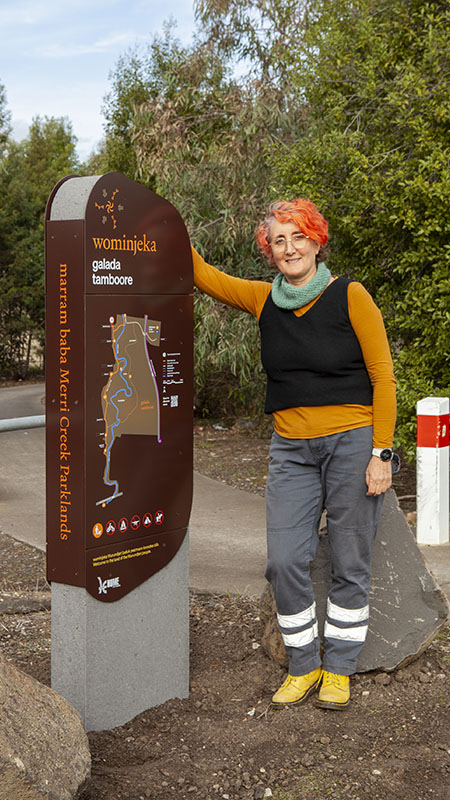
 Dr Toni Roberts, photograph by Dianna Wells“Wominjeka Wurundjeri balluk yearmann koondee biiik.”
“Welcome to the land of the Wurundjeri people.”
This is the warm and generous greeting, written in Woi-wurrung and endorsed by Wurundjeri Woi-wurrung Elders, which visitors to the marram baba Merri Creek Parklands receive when they view the suite of interpretive and wayfinding signs that were installed in the parklands in July 2023.
A year on from the unveiling of the new signage, the thoughtful work of the project team has been recognised with a win at the Melbourne Design Awards 2024, receiving a Gold Award in the Graphic Design – Environmental Award category.
“Whenever I’m lucky enough to see a Golden Whistler, it’s always because I’ve heard it first,” says Adi Tudor, a wildlife photographer who enjoys regular walks along Merri Creek. “They’ve got a very beautiful, melodic song. It always takes me by surprise, but it’s such a delight.”
Small insect-eating birds like Golden Whistlers have a preference for habitat where there is dense understorey and mid-storey shrubs to provide protection from larger, more territorial birds. While they are a relatively common species, and not under imminent threat, it’s unusual for them to be seen in the inner-north part of the Merri Creek.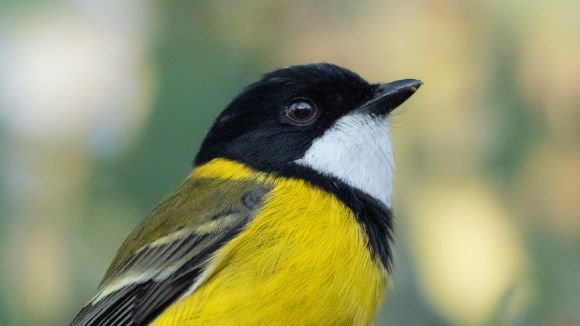 Golden Whistler (Pachycephala pectoralis), photograph by Adi Tudor
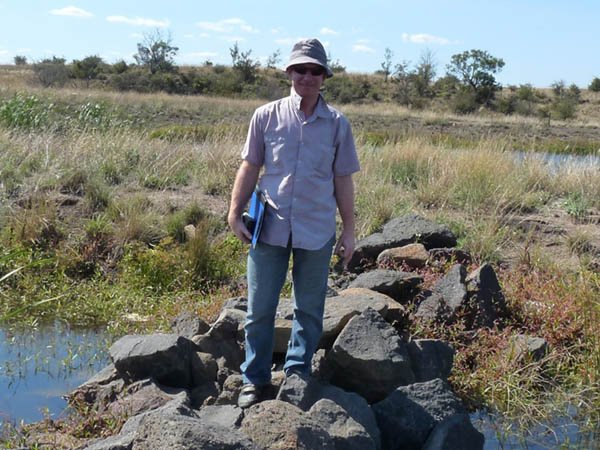
As Dr Brendan Casey sits at his desk, the beautiful and eerie calls of the Growling Grass Frog coming from his computer take him back to the banks of the Merri Creek where he spent childhood days exploring with wonder. The passion born from those early days drives him through the laborious process of manually working through 20,000 frog call recordings gathered over three years of research.
Brendan grew up near the Merri Creek, at a time when native frogs – including Growling Grass Frogs – were abundant. Several decades later, with the Growling Grass Frog listed as vulnerable at both national and state levels, Brendan returned to the area to undertake a monitoring project that would lead to improved understanding of the environmental conditions that affect the frogs’ call activity.
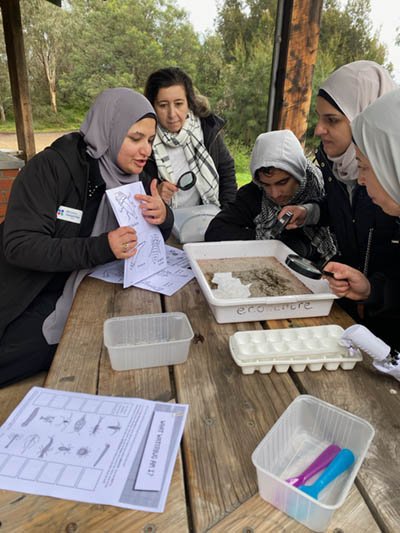 Helping the Merri Creek to heal helped Arjumand Khan form a new community – and in doing so, she's inspired hundreds to learn through the tactile experience of nature.
Arjumand Khan was pushing a pram past a noticeboard on her daily walk as a new arrival from India in 2006, when something on the noticeboard caught her attention. In the pram, her tiny baby slept soundly. A flyer on the noticeboard invited mothers of small children to join a local walking group.
As Arjumand walked the streets of Fawkner and along the Merri Creek, the walking group lingered in her mind. She was a new mother in a new country, without a network to support her through early motherhood. Her walks in nature along the Merri Creek gave her solace, but she yearned for community.
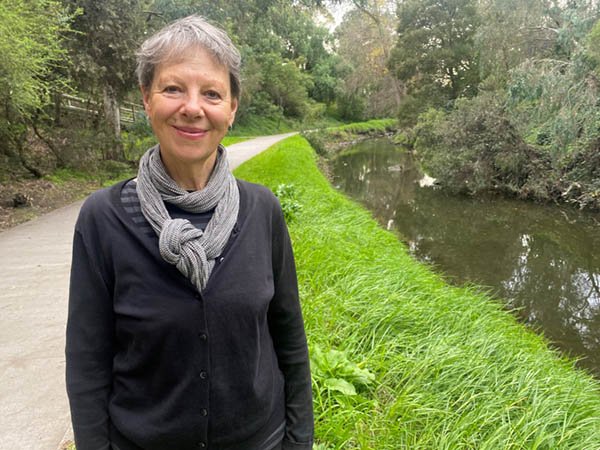
My place: a Q&A with the people who love and protect the Merri
Favourite spot on the Merri Creek?
My two favourite spots are bababi marning and galgi ngarrk native grassland reserves. These places feel far-removed from urban Melbourne, even with the city skyline on the horizon. ngarri-djarrang is a treasure trove of grassland species, and spending time walking there – eyes down and peeled – is a meditation.
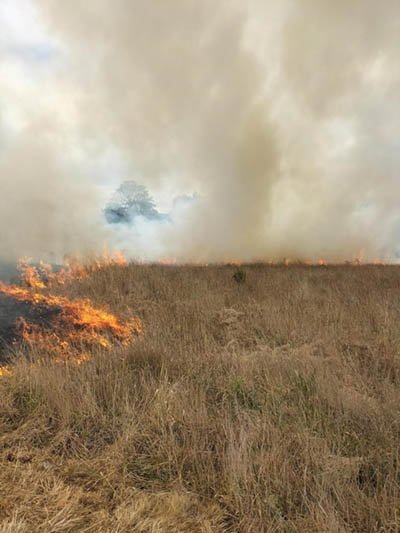
Matt Tudor stands surrounded by grasses in the Amberfield Grasslands Reserve, Craigieburn, in Wurundjeri Woi-Wurrung country. In his hands he holds a wand attached to what looks like a jerry can – the apparatus is known as a “fire bug” and its design is informed by the firestick, a traditional tool used by Indigenous Australians.
Matt has visited these grasslands tens of times in the eighteen months he’s been contributing to its management as a team leader in Merri Creek Management’s ecological restoration team. He’s seen the place change through seasons and years – and he’s seen how the grasslands respond to the program of annual ecological burning, which we deliver on behalf of Hume City Council.
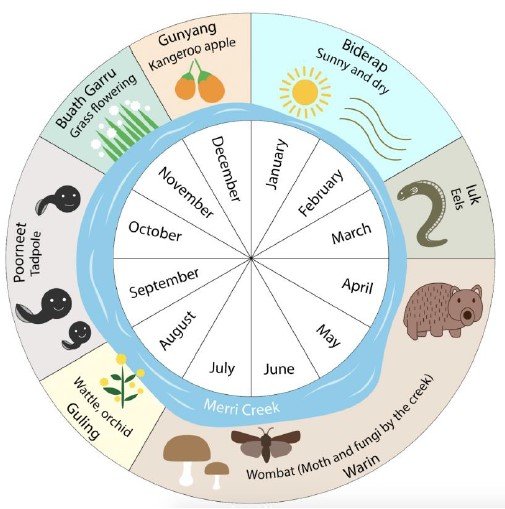
If you’re walking along the Merri Creek this time of year, you’ll notice what Wurundjeri Woi-wurrung people observe as the season of Waring. Waring is one of six seasons on the Wurundjeri Woi-Wurrung seasonal calendar and is the longest of the seasons, occurring over four months.
Like other Aboriginal and Torres Strait Islander Peoples, Wurundjeri Woi-wurrung people have seasonal markers based on changes in the landscape and skyscape rather than the Western calendar. Museum Victoria describes this local seasonal calendar as “marked by the movement of the stars in the night sky and changes in the weather, coinciding with the life cycles of plants and animals”. There are many interpretations of seasons available for Wurundjeri Woi-Wurrung Country.
Our vision for continuous public parklands along Merri Creek is one step closer with the Victorian government’s 2023 adoption of the Future Directions Plan for the marram baba Merri Creek Regional Parklands, a proposed chain of parks and conservation reserves stretching from Campbellfield to Beveridge in Wurundjeri Woi-wurrung country. marram baba means “body of mother” in Woi-wurrung language.
The proposed parklands will join a number of existing reserves with other areas proposed for parklands acquisition as urban development proceeds. The expected completion date is 2050. The park will offer habitat for a suite of grassland and woodland species like the vulnerable Growling Grass Frog and critically endangered Golden Sun Moth among many others as well as important opportunities for people to connect with nature.
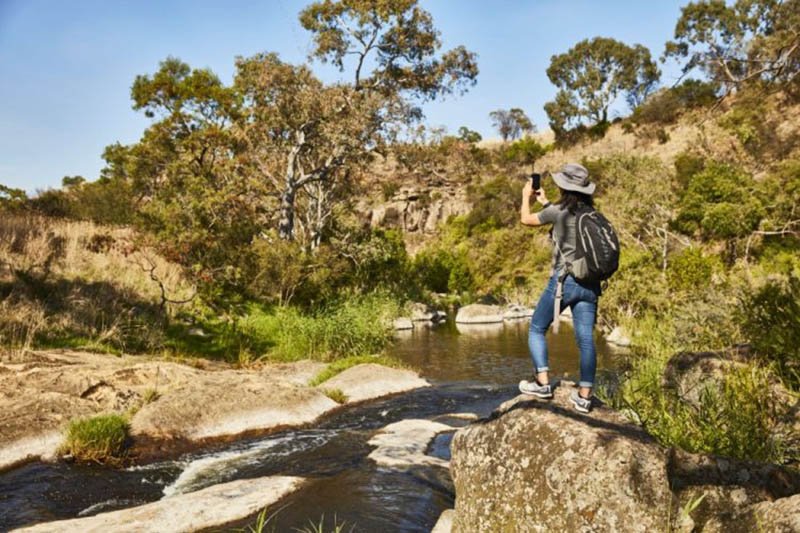
The vision for the Parklands is: marram baba Merri Creek Regional Parklands is the preeminent natural corridor running through Melbourne’s north on Wurundjeri Woi-wurrung Country, connecting and nurturing culture, nature, water, and people.
In early June, Merri Creek Management Committee honoured National Sorry Day with Whittlesea Council at the Quarry Hill Bushland Park in South Morang, co-leading a guided walk and community event Local Bushland: a Historical Discovery.
The theme of this year’s National Reconciliation Week, held by Reconciliation Australia, is Now More Than Ever, a theme that reminds Australians that “no matter what, the fight for justice and the rights of Aboriginal and Torres Strait Islander people will – and must – continue.”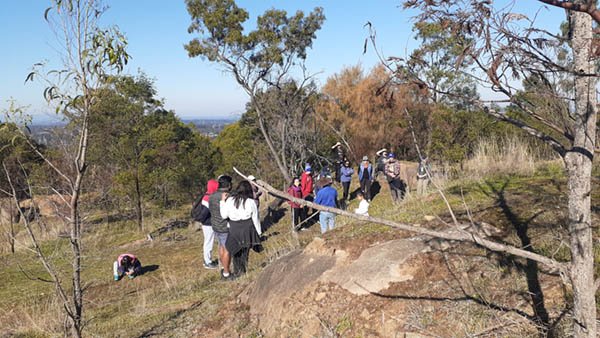
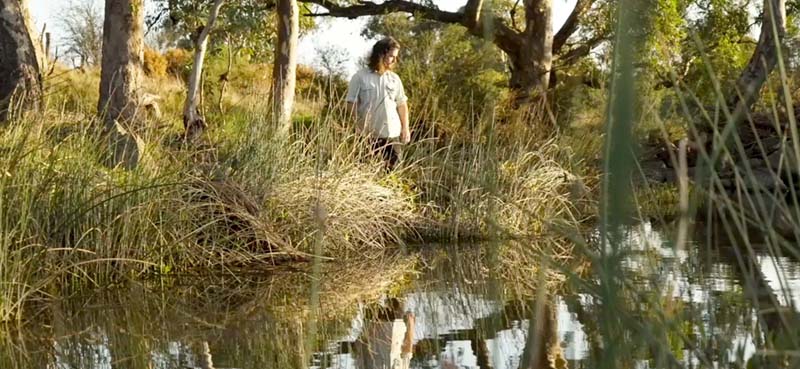
At first, it’s a gentle, deep sound, which expands into the night as it grows. Then another frog might join the slow, melancholic chorus in a different key – and a moody, musical performance begins among the reeds at the edge of the Merri Creek. Our ecologist Michael Longmore is there to hear it.
But if, like Michael, you’ve heard this call recently, you’re remarkably lucky. The Growling Grass Frog, listed as vulnerable at both national and state levels, is holding on against the odds. Populations have declined across Australia since the 1970s, including those along the Merri Creek.
The good news is that with your help, Michael and the team at Merri Creek Management Committee will work to protect the southern populations of Growling Grass Frogs along the Merri Creek and you can help. Find out more about our plans below.
More Articles …
- A time of change at Merri Creek Management Committee
- Green Links Grants awarded to the Merri Creek
- Merri community celebrates 50 years at Ribbon of Nature book launch
- International Women’s Day
- Donor-funded survey reveals Growling Grass Frogs breeding at new wetlands
- MCMC acknowledged in Environmental Award
- “Ribbon of Nature” - New Merri Creek Book Out Now
- Environmental Award to Ex MCMC Manager
- Why our Eucalypts look unhealthy
- MCMC participates in water network
Page 8 of 17
Merri Events Calendar
09:30AM - 11:30AM
FoMC Coburg Lake & Surrounds - Wednesday Working Bee
10:00AM - 11:30AM
MCMC: Connecting Kids with Birrarung's Creatures
10:00AM - 11:30PM
MCMC: Platypus, People and the Birrarung: Making Peace with Change
09:30AM - 11:30AM
FoMC Coburg Lake & Surrounds - Friday Working Bee
10:00AM - 12:00PM
FoMC @ Northcote Gorge - Weeding and Litter Pickup Event
10:00AM - 12:00PM
FoMC @ Edgars Creek - Maintenance Event
10:00AM - 12:00PM
MCMC: galgi ngarrk - walk and talk
04:30PM - 06:30PM
MCMC: Searching for platypus: Platy Project dusk walk at Birrarung and the Merri at Dights Falls
09:30AM - 11:30AM
FoMC Coburg Lake & Surrounds - Wednesday Working Bee
09:00AM - 10:30PM
MCMC: Beveridge bird walk & bird count



Connect on Social Media |


 Merri Creek Management Committee. 2 Lee St, East Brunswick, Victoria, Australia 3057 (view map in new window )
Phone:(03) 9380 8199 Email: ABN: 13 025 599 242
© Merri Creek Management Committee